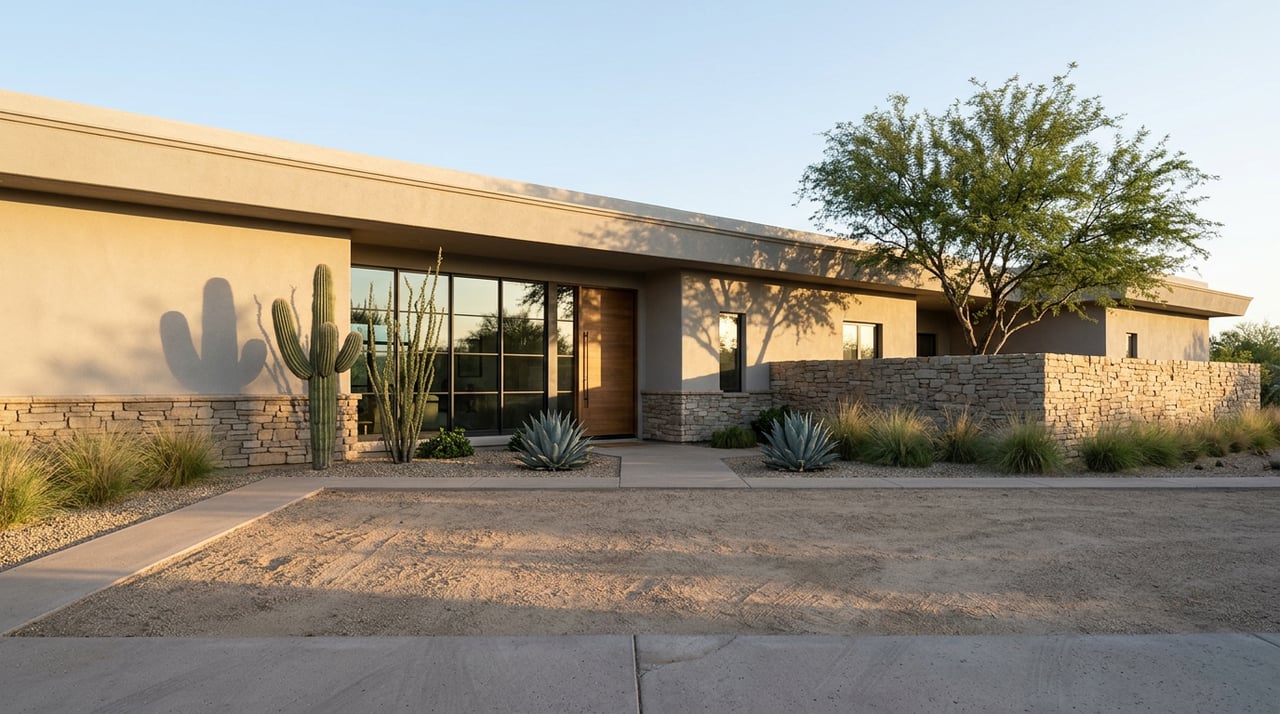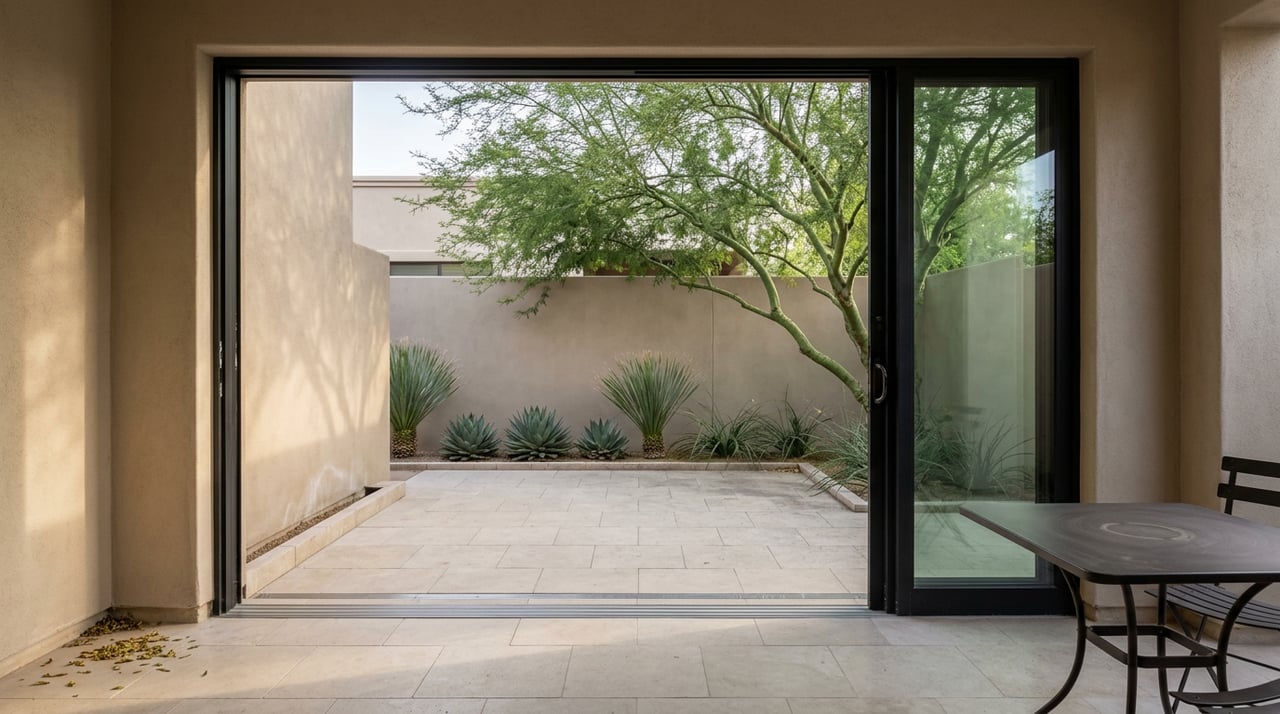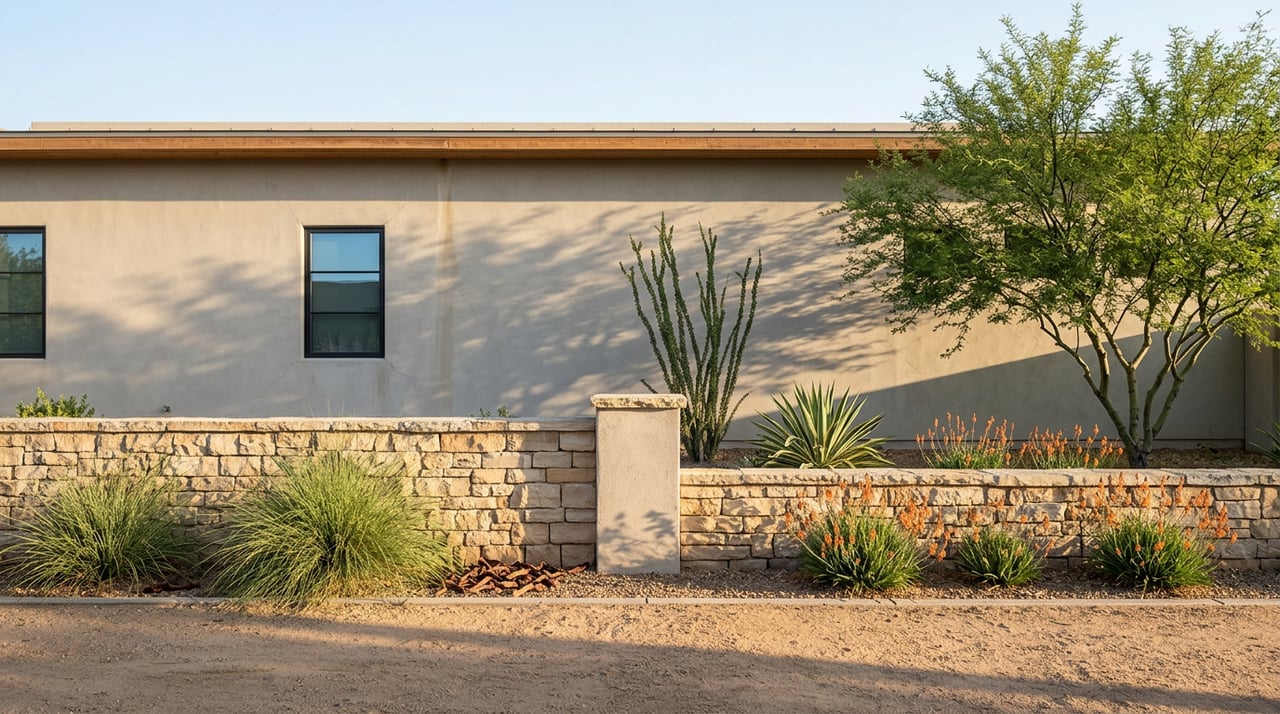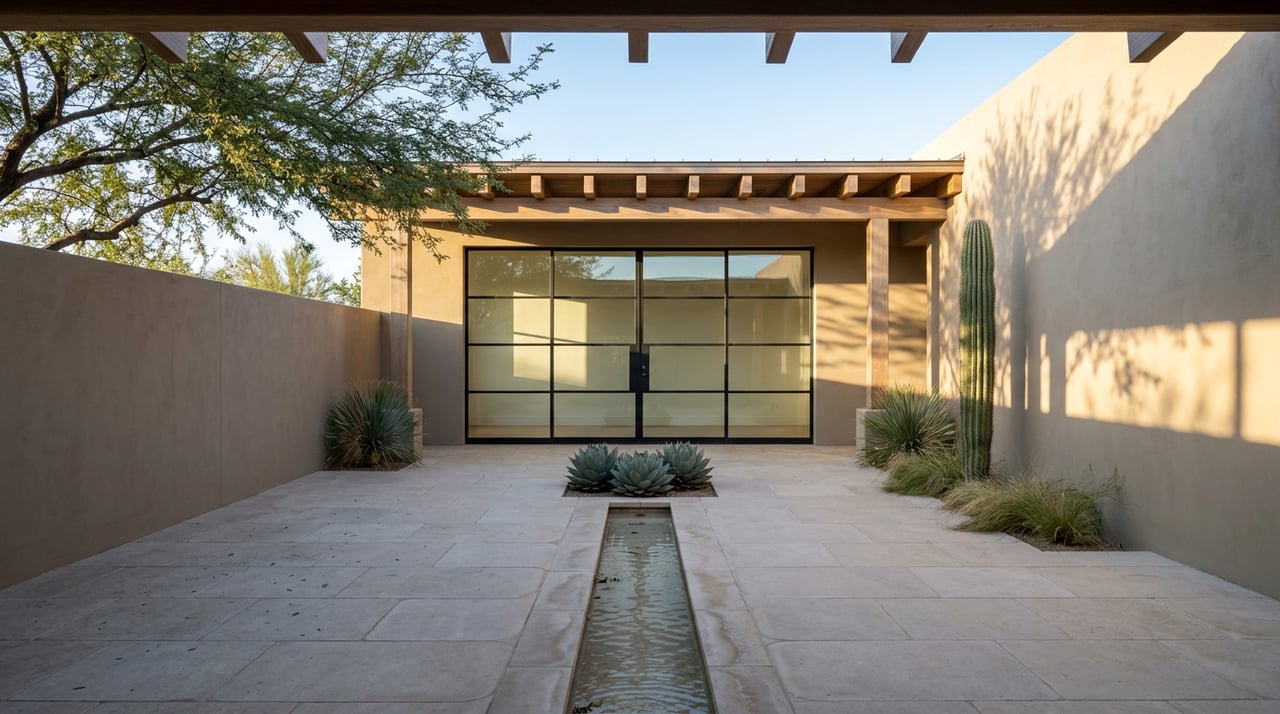
"We looked at the men's locker room like phase two of our lower clubhouse," says Joan Sykora, Desert Highlands' Chief Brand and Experience Officer, describing a construction project that's been underway most of this year. It's a small sentence, but it tells you something the club hasn't said outright: this isn't a single renovation. It's two, running in opposite directions at the same time, and if you've had a locker here for more than a season, you've probably felt the difference without naming it.
One half of Desert Highlands is being modernized. The other half is being restored to exactly what it looked like in 1983. Neither is an accident, and once you see the split, the rest of this year's changes start to make a different kind of sense.
The Locker Room Is Phase Two of Something Bigger
The $3.5 million men's locker room project, on track for completion by the end of 2026, isn't a standalone job. It's the second half of a plan that started with the golf shop and women's locker room, a $2.5 million renovation that wrapped in late 2025 with brighter finishes, a refreshed card lounge, and a self-serve station stocked with grab-and-go lunches and wine on tap. Sykora's team treated that project as phase one on purpose, holding the bigger, more structural men's side for a second pass once they'd learned what worked.
What's coming is a genuine reworking of the space, not a cosmetic refresh. Walls are moving. New windows and accordion doors will open the men's grill and lounge directly onto the outdoor patio, a change Sykora says was meant to fix a longstanding problem with private-club locker rooms in general: they tend to be dark, closed off, and more storage than gathering space. The new addition getting the most attention is the Nicklaus Room, a fireside lounge with oversized leather chairs and a bookshelf, built as a nod to Jack Nicklaus and the club's origin as his first Arizona design. Countertops throughout the wet areas will be leathered granite finished in antique or champagne brass, deliberately non-reflective, paired with matte black fixtures elsewhere.
None of this is designed to look old. It's designed to look considered.
The Course Renovation Went the Opposite Direction
Compare that to what just happened on the golf course, and the contrast gets sharper. Desert Highlands' championship course, the same one Nicklaus designed in the early 1980s and the site of the first two Skins Games in 1983 and 1984, just underwent a $9.8 million restoration that took first place in the private club category of Golf Inc. Magazine's 2026 Best Renovation of the Year awards, beating out Mira Vista Country Club in Texas, the Landings Golf and Athletic Club in Georgia, and earning Stones River Country Club in Tennessee an honorable mention.
The goal of that project wasn't modernization. It was reversal. Working with Nicklaus Design under lead architect Chad Goetz, the crew reconstructed the greens and expanded them by roughly 26 percent, but the point of the expansion was to bring back strategic pin positions and architectural features that had softened over four decades of play. The putting surfaces were converted back from Bermuda grass to Bentgrass, the original turf Nicklaus specified when the course opened. Where the locker room project is adding light, opening walls, and building something the club didn't have before, the course project spent nearly ten million dollars trying to look exactly like it did the year it opened.
That's not a coincidence of timing. It's a decision about what Desert Highlands considers irreplaceable. You can rebuild a locker room to be more open and social without losing anything, because the locker room was never the point. The Nicklaus routing is.
The Split Shows Up Even Inside the Course Project Itself
The restoration wasn't purely an exercise in turning back the clock, and that's the more interesting detail. As part of the same overall project, the club also built something that never existed before: The Ridge, a 28,000-square-foot Himalayas-style putting course constructed on the site of the old practice greens by the clubhouse. It's lit for night play and includes an outdoor bar and built-in speakers, designed as a social gathering spot rather than a warm-up area.
So even the restoration wasn't restoration everywhere. The 18 holes Nicklaus routed in 1983 got put back exactly as he drew them. The practice ground next to the clubhouse, which was never part of his original design intent in the same way, got reimagined as something entirely new. The line isn't "golf course versus clubhouse." It's narrower than that: the actual playing corridor is sacred, and everything adjacent to it, whether that's a locker room or a practice green, is open for reinvention.
What's Actually Open Right Now
If you're planning your fall calendar, here's where things stand heading into the new season:
- Jack's and its patio extension, Jack's Backyard, remain the club's most social dining option, named for Nicklaus and built around a communal bar table that seats up to 22, with golf memorabilia lining the entry.
- The Ventana Dining Room offers the more formal option, with a menu built around local and seasonal ingredients and a view over the valley that's better after sunset than at lunch.
- The Racquet Club's 13 courts still span all three Grand Slam surfaces, grass, clay, and hard, and the club hosts the annual USTA Southwest Grass Court Classic on its four grass courts. Nick Kyrgios, after playing there, called the grass "better than Wimby [Wimbledon]."
- Four dedicated pickleball courts are in regular use, a sport that didn't have a home at the club until the Racquet Club added its first two courts several years ago.
- The 7,700-square-foot Wellness Center and the dog park round out the amenities most members use without thinking twice about them, which is sort of the point.
None of these are new this month. But taken together with the men's locker room finishing this fall and the course restoration fresh off a national award, this is the first season in a while where the entire lower clubhouse and the entire golf operation are simultaneously at a finished or near-finished state. That doesn't happen often at a club this size.
Why the Split Matters If You Live Here
Desert Highlands has 563 memberships, and every one of them is tied to a home purchase rather than sold separately. There's no waitlist, no membership tier system, and as Sykora puts it, everybody has access to everything. That structure means capital decisions like these aren't made to attract new members from outside. They're made for the people already living here, which is probably why the club has been willing to spend restoration-level money on the one thing, the golf course, that can't be replaced if it's lost, while treating everything else as fair game for reinvention.
If you've walked past the men's locker room construction fencing this year, or noticed the greens look sharper than they did two years ago, this is why. One project is protecting a piece of golf history. The other is betting that a warmer, more open social space serves the next forty years better than the one that's there now. Both bets seem like the right ones.
If all this renovation activity has you thinking about what it means for values inside the gates, or you're simply curious what a home here might be worth given the club's current momentum, Ranee Jacobus can walk you through it. Schedule a Private Consultation whenever you're ready to talk specifics.